“TRNC in Light of Current Developments”
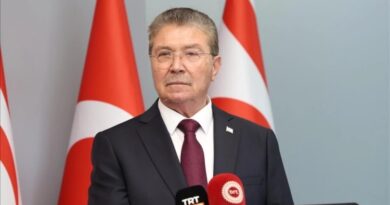
The Turkish Republic of Northern Cyprus (TRNC) Ambassador to Ankara, İsmet Korukoğlu, evaluated the historical background of the Cyprus issue and the TRNC’s position in light of current developments during a conference at Ege University.
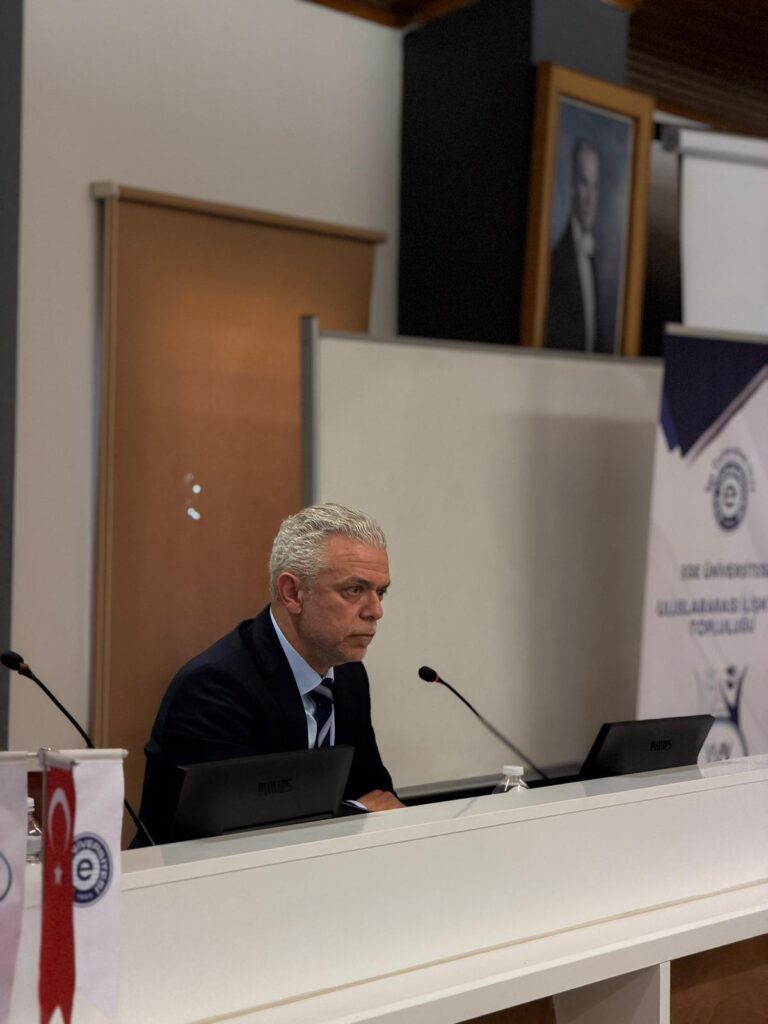
Turkish Republic of Northern Cyprus Ambassador to Ankara İsmet Korukoğlu spoke at a conference titled “The Turkish Republic of Northern Cyprus in Light of Current Developments,” organized by the International Relations Society of Ege University.
Moderated by Assoc. Prof. Dr. Altuğ Günal, Korukoğlu emphasized that the 1960 Agreements granted the Turkish Cypriot people the status of a “founding partner,” not a “minority.”
Recalling that the partnership state was established by the will of five signatory parties, Korukoğlu stated that the Turkish Cypriot people exercised their right to self-determination and became a fundamental element of this structure.
He noted that the Treaties of Guarantee and Alliance strengthened Türkiye’s legal and de facto ties to the island, providing a significant security guarantee.
Korukoğlu said the declaration of the TRNC in 1983 was a natural outcome of the struggle for existence during the “enclave” period between 1963 and 1974.
He added that despite being confined to limited areas, the Turkish Cypriot people gradually built their administrative structure and statehood step by step.
Referring to the Montevideo Convention criteria, Korukoğlu stated that the TRNC possesses all the elements of statehood, including territory, population, an effective government, and the capacity to establish foreign relations.
Emphasizing that recognition is a political choice, Korukoğlu said this does not negate the TRNC’s legal legitimacy.
Touching on regional developments, Korukoğlu noted that conflicts in the Middle East are reshaping defense alliances, while energy, economy, and supply chains have become decisive factors in global competition.
Pointing to the weakening influence of international organizations, Korukoğlu stated that the TRNC’s strategic importance has increased in this new context.