Öztürkler: Burning flags and posters is not a solution it is a sign of hatred
Strong reactions came from state and government officials to the burning of the flags of Türkiye and the Turkish Republic of Northern Cyprus during Easter bonfires in Southern Cyprus.
Speaker of Parliament Ziya Öztürkler described the act as “an unacceptable provocation,” while Prime Minister Ünal Üstel stressed that the developments threatened the atmosphere of peace and security on the island.
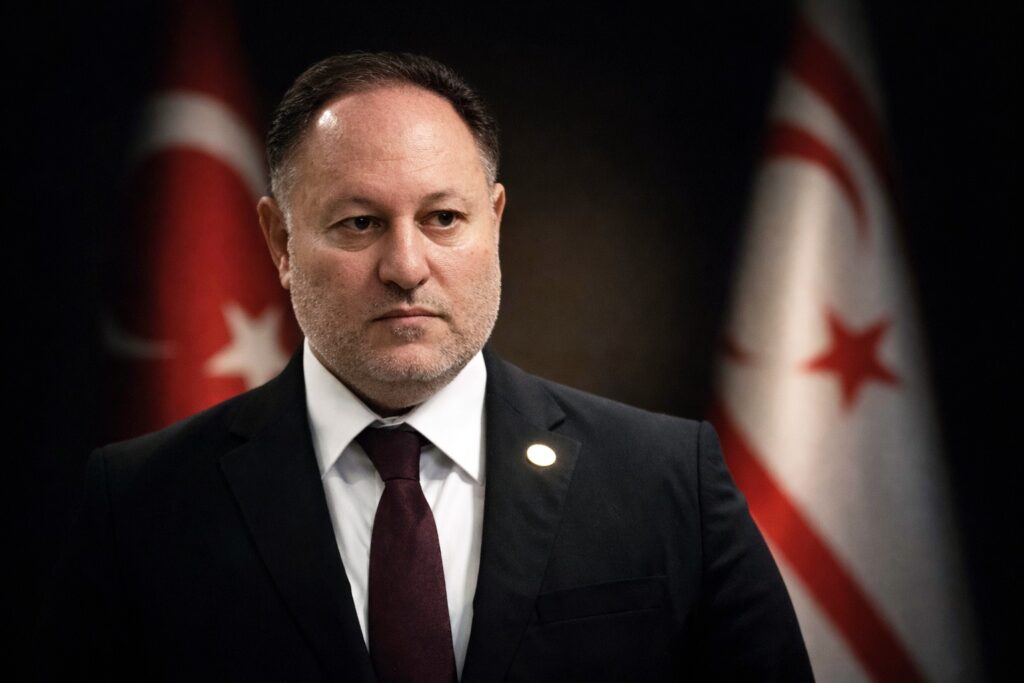
Speaker of the Republic’s Assembly Ziya Öztürkler described the burning of the Turkish Republic of Northern Cyprus (TRNC) and Turkish flags, as well as posters of former Minister of National Defence Hulusi Akar, during Easter bonfires in South Cyprus as “an unacceptable provocation.”
Öztürkler stated that such actions undermined the will to live in peace and tranquillity on the island, eroded inter-communal trust, and reflected a fanatical mindset.
Stressing that historically EOKA’s bloody legacy was filled with terror and massacres, Öztürkler said, “Embracing this legacy is not holding on to the future, but to the darkness of the past.”
Öztürkler noted that these recurring scenarios on every national day were seen as efforts by the Greek Cypriot administration to escalate tensions by backing themselves with the European Union and the European Parliament, adding that this approach fueled mutual distrust rather than the peace of the two peoples living side by side on the island.
He stated that such fanaticism led not only Turkish Cypriots but also the Greek Cypriot community into a deadlock, adding, “an increase in tension distances the island’s future from a shared life and leads to consequences that even the South cannot bear. There is no alternative to peace; violence and hate speech are destructive for both sides.”
Öztürkler stressed that the Greek Cypriot administration should know that “EOKA’s bloody legacy is not heroism but an inhumane history of terror. Embracing this legacy is incompatible with European values. Burning flags and posters cannot block the path to peace; on the contrary, such actions make the need for a solution even more visible.”
He also evaluated Greek Cypriot leader Nikos Christodoulides’ call in his Easter message for “the resumption of negotiations” and his statement “we will never compromise with occupation,” saying that this rhetoric shown the Greek Cypriot administration still maintains a one-sided sense of superiority by embracing EOKA’s bloody legacy.
Öztürkler further stated that Greek Orthodox Archbishop Georgios’ wish to see an increased Greek presence on the island clearly shown that the church, politics, and this mindset operate under the same roof.
“A religious institution adopting such a political and militarist discourse is an attitude that overshadows the search for peace and damages inter-communal trust,” he said.
“No matter what anyone says, the Turkish army will not leave the island. As the Turkish Cypriot people, we firmly declare that the presence of the Turkish army on the island, which is the guarantee of our security and peace, will continue. This presence is an indispensable assurance of our people’s free will and equal right to live” Öztürkler concluded.